
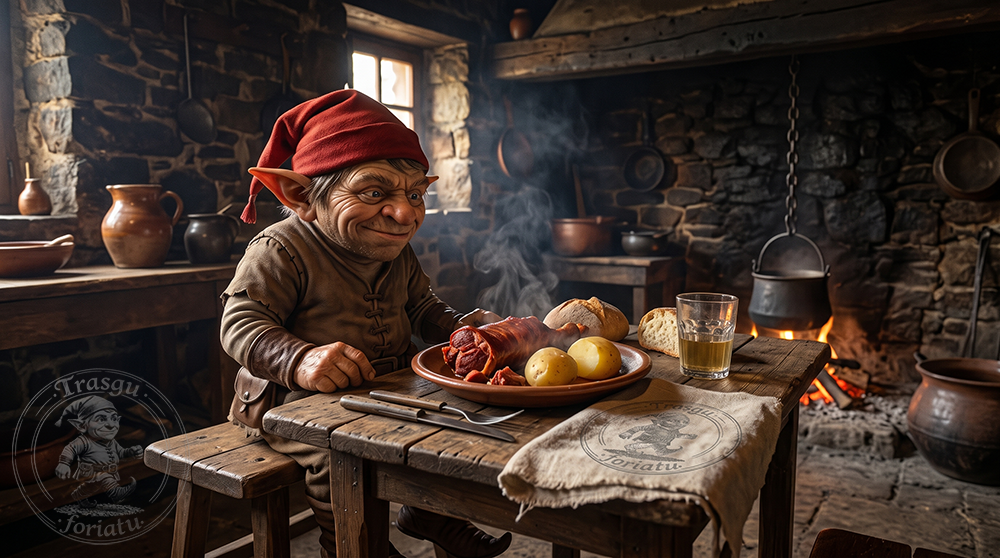
El Butieḷḷu (Botelo): el rey ahumado del invierno en el suroccidente asturiano
En las tierras altas del suroccidente de Asturias especialmente en Cangas del Narcea, Tineo, Ibias, Allande y Degaña, el invierno tiene un sabor propio, intenso y ancestral. Cuando los fríos arremeten en los valles del Narcea y del Ibias, las cocinas tradicionales recuperan una de las joyas más contundentes de la gastronomía asturiana: el botelo, conocido en las hablas locales como butieḷḷu, butiellu o butiecho (según la isoglosa dialectal de la che vaqueira en cada parroquia).
Más que un simple embutido, el butieḷḷu es un testimonio vivo de la cultura del aprovechamiento, la economía de subsistencia de montaña y la maestría en el curado al humo de leña noble.
Historia y raíces: del samartín a la mesa invernal
La historia del butieḷḷu está indisolublemente ligada al samartín (la matanza tradicional del cerdo celebrada a partir del 11 de noviembre, festividad de San Martín). En una geografía aislada por puertos de montaña y nevadas frecuentes, conservar las proteínas animales durante meses sin refrigeración artificial era una cuestión de supervivencia.
Etimológicamente, su nombre procede del latín botellus (intestino o tripa rellena), raíz que comparte con el botillo berciano o el butelo gallego. Sin embargo, en el suroccidente asturiano evolucionó bajo una identidad propia: mientras que los cortes nobles (lomos, jamones, solomillos) se destinaban a la curación prolongada o al pago de rentas, las piezas óseas y cartilaginosas —ricas en colágeno, sabor y grasa— se adobaban y embuchaban en las tripas más gruesas del animal para ser consumidas en los meses más crudos del invierno y en celebraciones señaladas como el Antroxu.
Elaboración artesanal: el secreto del adobo y el humo de roble
Aunque hoy se elabora durante casi todo el año en las carnicerías y chacinerías artesanales de Cangas del Narcea o Tineo, su proceso sigue fiel a los cánones tradicionales:
- Selección de las carnes: La base indiscutible del butieḷḷu asturiano es la costilla y el rabo de cerdo troceados en piezas de tamaño medio. A diferencia de otras variantes vecinas, el protagonismo del rabo y la costilla carnosa es muy elevado, pudiendo acompañarse en menor medida de espinazo, lengua o carrillera.
- El adobo: Las piezas se mezclan con sal, ajo machacado, pimentón dulce y picante (en proporción equilibrada para aportar color y un ligero toque cálido sin enmascarar la carne) y, en muchas casas y obradores, un toque de orégano silvestre o un chorro de vino tinto de la tierra (D.O.P. Cangas). La masa reposa en un lugar fresco entre 24 y 48 horas para que la carne tome el sabor y el color característicos.
- Embuchado y atado: La mezcla adobada se introduce manualmente, apretando con firmeza para evitar bolsas de aire, en el estómago o el ciego del cerdo previamente lavados y saneados. Se cose la abertura con hilo de bramante y se ata formando una pieza globosa u ovalada cuyo peso suele oscilar entre los 800 gramos y los 2 kilos.
- Ahumado y curado: Es la fase que define su personalidad. Las piezas se cuelgan en el llar o en ahumaderos tradicionales alimentados con leña de roble (carbayu) o encina durante varios días. El humo actúa como conservante natural, sella la tripa y le confiere ese aroma profundo tan característico. Posteriormente, madura en un secadero natural ventilado durante unas dos o tres semanas.
Receta tradicional: cómo cocer y servir el butieḷḷu
El butieḷḷu es un embutido crudo-curado con abundante hueso y tejido conectivo, por lo que nunca se consume crudo ni a la plancha. Requiere tiempo y fuego manso para que la gelatina se funda y la carne se desprenda del hueso con solo rozarla.
Ingredientes (para 4-6 comensales)
- 1 butieḷḷu asturiano de aproximadamente 1,2 - 1,5 kg
- 1 kg de patatas (preferiblemente de variedad harinosa para cachelos)
- 1 berza asturiana o repollo rizado
- 2 o 3 chorizos asturianos curados (opcional, para enriquecer el compango)
- Agua abundante (sin sal, pues el embutido ya aporta la suya)
Preparación paso a paso
- El arranque en frío: Introduce el butieḷḷu entero en una olla amplia y cúbrelo completamente con agua fría. Este detalle es fundamental: si se mete en agua hirviendo, el choque térmico puede hacer que la tripa reviente.
- Cocción lenta: Lleva el agua a ebullición a fuego medio-bajo. En cuanto empiece a hervir, baja el fuego al mínimo para mantener un hervor suave y constante (chup-chup muy ligero). Pincha ligeramente la piel con una aguja fina un par de veces para liberar presión sin que pierda sus jugos. Déjalo cocer entre 2 horas y 2 horas y media (calcula aproximadamente una hora y media por cada kilo de peso).
- Las verduras y patatas: Cuando falten unos 40 minutos para terminar la cocción, incorpora la berza limpia y troceada (previamente escaldada si tiene un sabor muy fuerte) y los chorizos. Diez minutos después, añade las patatas peladas y enteras (o chascadas en trozos grandes) para que se cuezan en el mismo caldo sustancioso y rojizo del embutido.
- Emplatado y corte: Retira con cuidado el butieḷḷu con una espumadera grande para que no se rompa antes de llegar a la fuente. Colócalo en el centro rodeado de las patatas, la berza y los chorizos. Ya en la mesa, se abre longitudinalmente con un cuchillo bien afilado, dejando al descubierto las costillas y los rabos humeantes, melosos y bañados en su propia salsa.
El triángulo del botelo: diferencias entre Asturias, El Bierzo y Galicia
Aunque comparten origen y parentesco en el noroeste peninsular, cada comarca ha imprimido su sello propio a este embutido:
| Característica | Butieḷḷu de Asturias (Cangas del Narcea / Occidente) | Botillo del Bierzo (I.G.P. León) | Butelo de Galicia (A Fonsagrada / Lugo) |
|---|---|---|---|
| Cortes predominantes | Altísima proporción de rabo y costilla carnosa; presencia menor de otros despieces. | Costilla (mínimo 65%) y rabo (máximo 20%), admitiendo lengua, carrillera o espinazo. | Costilla, rabo, cabezada y recortes magros con hueso. |
| Nivel de ahumado | Intenso y profundo, tradicionalmente con leña de roble (carbayu). | Medio, con leña de roble o encina durante al menos un día. | Medio-alto, muy ligado al humo de la lareira tradicional. |
| Forma y envoltura | Ciego o estómago de cerdo; formato artesanal variable (0,8 a 2 kg). | Ciego de cerdo; forma muy redondeada y regulada por el consejo regulador. | Estómago o vejiga; suele presentar un formato algo más achatado o irregular. |
| Guarnición típica | Berza asturiana, cachelos y chorizo asturiano. | Repollo cocido, patatas y chorizo berciano. | Grelos o nabizas, patatas cocidas y chorizo gallego. |
Citas gastronómicas imprescindibles
Si deseas degustar el butieḷḷu en su ambiente original, el calendario festivo del suroccidente ofrece citas ineludibles durante los primeros meses del año, destacando las Jornadas Gastronómicas del Butieḷḷu en Cangas del Narcea y las celebraciones tradicionales en concejos vecinos como Tineo o Ibias, donde restaurantes y casas de comidas rinden homenaje a este emblema de la cocina de montaña asturiana.
El Butieḷḷu (Botelo): el rei afumáu del iviernu nel suroccidente asturianu
Nas tierres altes del suroccidente d'Asturies especialmente en Cangas del Narcea, Tinéu, Ibias, Allande y Degaña, l'iviernu tien un sabor propio, intensu y ancestral. Cuando los fríos apreten nos valles del Narcea y del Ibias, las cocinas tradicionales recuperen una de las xoyas más contundentes de la gastronomía asturiana: el botelo, conocíu nas falas locales como butieḷḷu, butiellu o butiecho (según la isoglosa dialeutal de la che vaqueira en cada parroquia).
Más qu'un simple embutíu, el butieḷḷu ye un testimoniu vivu de la cultura del aprovechamientu, la economía de subsistencia de montaña y la maestría nel curáu al fumu de lleña noble.
Historia y raigaños: del samartín a la mesa ivernal
La historia del butieḷḷu ta indisolublemente lligada al samartín (la matanza tradicional del gochu celebrada a partir del 11 de payares, festividá de San Martín). Nuna xeografía aisllada por puertos de montaña y nevaes frecuentes, conservar las proteínas animales durante meses ensin refrigeración artificial yera una cuestión de supervivencia.
Etimolóxicamente, el so nome procede del llatín botellus (intestín o tripa rellena), raigañu que comparte col botillo bercianu o'l butelo gallegu. Sicasí, nel suroccidente asturianu evolucionó baxo una identidá propia: mientras que los cortes nobles (llombos, xamones, solomillos) destinábense a la curación enllargada o al pagu de rentes, las piezas óseas y cartilaxinosas —ricas en coláxenu, sabor y grasa— adobábense y embuchábense nas tripas más gruesas del animal pa ser consumíes nos meses más crudos del iviernu y en celebraciones señalaes como l'Antroxu.
Ellaboración artesanal: el secretu del adobu y el fumu de carbayu
Anque güei ellabórase durante cuasi tol añu nas carnicerías y chacinerías artesanales de Cangas del Narcea o Tinéu, el so procesu sigue fiel a los cánones tradicionales:
- Seleición de las carnes: La base indiscutible del butieḷḷu asturianu ye la costiella y el rabu de gochu trociaos en piezas de tamañu mediu. A diferencia d'otras variantes vecinas, el protagonismu del rabu y la costiellla carnosa ye mui eleváu, pudiendo acompañase en menor midida d'espinazu, llingua o carrillera.
- L'adobu: Las piezas mécense con sal, ayu machacáu, pimentón dulce y picante (en proporción equilibrada p'aportar color y un llixeru toque cálidu ensin enmascarar la carne) y, en muchas casas y obradores, un toque d'oriéganu montés o un chorru de vinu tintu de la tierra (D.O.P. Cangas). La masa reposa nun llugar frescu entre 24 y 48 horas pa que la carne cueya'l sabor y el color carauterísticos.
- Embucháu y atáu: La mezcla adobada introdúzse manualmente, apretando con firmeza pa evitar bolses d'aire, nel estómagu o'l ciegu del gochu previamente llavaos y saniaos. Cuésese l'abertura con filu de bramante y átase formando una pieza globosa u ovalada que'l so pesu suel oscilar entre los 800 gramos y los 2 quilos.
- Afumáu y curáu: Ye la fase que define la so personalidá. Las piezas cuélguense nel llar o n'afumaderos tradicionales alimentaos con lleña de carbayu o encina durante varios días. El fumu actúa como conservante natural, sella la tripa y dá-y esi aroma fondu tan carauterísticu. Posteriormente, madura nun secaderu natural ventiláu durante unas dos o tres selmanas.
Receta tradicional: cómo cocer y servir el butieḷḷu
El butieḷḷu ye un embutíu crudu-curáu con abondante güesu y texíu conectivu, polo que nunca se consume crudu nin a la plancha. Rique tiempu y fueu mansu pa que la xelatina se funda y la carne se desprenda del güesu con namás rozala.
Ingredientes (pa 4-6 comensales)
- 1 butieḷḷu asturianu d'aproximadamente 1,2 - 1,5 kg
- 1 kg de patatas (preferiblemente de variedá fariñosa pa cachelos)
- 1 berza asturiana o repollu rizáu
- 2 o 3 chorizos asturianos curaos (opcional, p'arriquecer el compangu)
- Agua abondante (ensin sal, pues l'embutíu yá aporta la suya)
Preparación pasu a pasu
- L'arranque en fríu: Introduz el butieḷḷu enteru nuna olla amplia y cúbrelu completamente con agua fría. Esti detalle ye fundamental: si se mete n'agua ferviendo, el choque térmicu pue facer que la tripa reviente.
- Cocción llenta: Lleva l'agua a ebullición a fueu mediu-baxu. En cuanto empiece a ferver, baxa'l fueu al mínimu pa mantener un fervor suave y constante (chup-chup mui llixeru). Pincha llixeramente la piel con una aguya fina un par de veces pa lliberar presión ensin que pierda los sos xugos. Déxalu cocer entre 2 horas y 2 horas y media (calcula aproximadamente una hora y media por cada quilu de pesu).
- Las verduras y patatas: Cuando falten unos 40 minutos pa terminar la cocción, incorpora la berza llimpia y trociada (previamente escaldada si tien un sabor mui fuerte) y los chorizos. Diez minutos depués, añade las patatas pelaes y enteras (o chascaes en trozos grandes) pa que se cuezan nel mesmu caldu sustanciosu y acoloratáu del embutíu.
- Emplatáu y corte: Retira con cuidáu'l butieḷḷu con una espumadera grande pa que nun se rompa antes de llegar a la fonte. Colócalu nel centru arrodiáu de las patatas, la berza y los chorizos. Yá na mesa, ábrese llonxitudinalmente con un cuchiellu bien afiláu, dexando al descubiertu las costiellas y los rabos fumeantes, melosos y bañaos na so propia salsa.
El triángulu del botelo: diferencias entre Asturies, El Bierzu y Galicia
Anque comparten orixe y parentescu nel noroeste peninsular, cada comarca imprimió'l so sellu propio a esti embutíu:
| Carauterística | Butieḷḷu d'Asturies (Cangas del Narcea / Occidente) | Botillo del Bierzu (I.X.P. Llión) | Butelo de Galicia (A Fonsagrada / Lugo) |
|---|---|---|---|
| Cortes predominantes | Altísima proporción de rabu y costiella carnosa; presencia menor d'otros despieces. | Costiella (mínimu 65%) y rabu (máximu 20%), almitiendo llingua, carrillera o espinazu. | Costiella, rabu, cabezada y recortes magros con güesu. |
| Nivel d'afumáu | Intensu y fondu, tradicionalmente con lleña de carbayu. | Mediu, con lleña de carbayu o encina durante a lo menos un día. | Mediu-altu, mui lligáu al fumu de la lareira tradicional. |
| Forma y envoltura | Ciegu o estómagu de gochu; formatu artesanal variable (0,8 a 2 kg). | Ciegu de gochu; forma mui arredondiada y regulada pol conseyu regulador. | Estómagu o vexiga; suel presentar un formatu daqué más achatáu o irregular. |
| Guarnición típica | Berza asturiana, cachelos y chorizu asturianu. | Repollu cocíu, patatas y chorizu bercianu. | Grelos o nabizas, patatas cocíes y chorizu gallegu. |
Citas gastronómicas imprescindibles
Si deseas degustar el butieḷḷu nel so ambiente orixinal, el calendariu festivu del suroccidente ufierta citas ineludibles durante los primeros meses del añu, destacando las Xornaes Gastronómicas del Butieḷḷu en Cangas del Narcea y las celebraciones tradicionales en conceyos vecinos como Tinéu o Ibias, onde restaurantes y casas de comidas rinden homenaxe a esti emblema de la cocina de montaña asturiana.
The Butieḷḷu (Botelo): the smoked winter king of southwestern Asturias
In the highlands of southwestern Asturias —especially in Cangas del Narcea, Tineo, Ibias, Allande, and Degaña—, winter has its own intense and ancestral flavor. When the cold weather strikes the Narcea and Ibias valleys, traditional kitchens bring back one of the heartiest jewels of Asturian gastronomy: the botelo, known in local dialects as butieḷḷu, butiellu, or butiecho (depending on the dialectal isogloss of the che vaqueira in each parish).
More than just a cured sausage, the butieḷḷu is a living testimony to the culture of zero-waste utilization, mountain subsistence economy, and mastery in curing over noble hardwood smoke.
History and roots: from the samartín to the winter table
The history of the butieḷḷu is inextricably linked to the samartín (the traditional pig slaughter celebrated starting November 11, Saint Martin's Day). In a geography isolated by mountain passes and frequent snowfalls, preserving animal proteins for months without artificial refrigeration was a matter of survival.
Etymologically, its name comes from the Latin botellus (intestine or stuffed casing), a root it shares with the botillo from El Bierzo or the Galician butelo. However, in southwestern Asturias it evolved with its own identity: while noble cuts (loins, hams, tenderloins) were set aside for prolonged curing or paying rents, the bony and cartilaginous pieces —rich in collagen, flavor, and fat— were marinated and stuffed into the animal's thickest casings to be eaten during the harshest winter months and on major celebrations such as Antroxu (Carnival).
Artisanal production: the secret of the marinade and oak smoke
Although today it is produced almost year-round in artisanal butcher shops and charcuteries in Cangas del Narcea or Tineo, its process remains faithful to traditional standards:
- Selection of meats: The indisputable foundation of the Asturian butieḷḷu is pork ribs and tail chopped into medium-sized pieces. Unlike neighboring variants, the prominence of tail and meaty ribs is very high, occasionally accompanied to a lesser extent by backbone, tongue, or cheek.
- The marinade: The pieces are mixed with salt, crushed garlic, sweet and hot paprika (in a balanced ratio to provide color and a slight warm kick without masking the meat), and, in many homes and workshops, a touch of wild oregano or a splash of local red wine (Cangas P.D.O.). The mixture rests in a cool place for 24 to 48 hours so the meat absorbs its characteristic flavor and color.
- Stuffing and tying: The marinated mixture is stuffed by hand, pressing firmly to avoid air pockets, into the previously washed and cleaned pork stomach or cecum. The opening is sewn shut with twine and tied to form a globular or oval piece whose weight usually ranges between 800 grams and 2 kilograms.
- Smoking and curing: This is the stage that defines its personality. The pieces are hung over the hearth (llar) or in traditional smokehouses fueled with oak (carbayu) or holm oak wood for several days. The smoke acts as a natural preservative, seals the casing, and gives it that deeply characteristic aroma. Afterward, it matures in a naturally ventilated drying room for about two to three weeks.
Traditional recipe: how to cook and serve the butieḷḷu
The butieḷḷu is a raw-cured sausage with abundant bone and connective tissue, which is why it is never eaten raw or grilled. It requires time and gentle heat so that the gelatin melts and the meat falls off the bone at the slightest touch.
Ingredients (for 4-6 diners)
- 1 Asturian butieḷḷu weighing approximately 1.2 - 1.5 kg
- 1 kg of potatoes (preferably a floury variety suitable for cachelos)
- 1 Asturian collard greens (berza) or Savoy cabbage
- 2 or 3 cured Asturian chorizos (optional, to enrich the compango)
- Abundant water (without salt, as the sausage already provides its own)
Step-by-step preparation
- Starting cold: Place the whole butieḷḷu in a large pot and cover it completely with cold water. This detail is essential: if placed in boiling water, thermal shock can cause the casing to burst.
- Slow simmering: Bring the water to a boil over medium-low heat. As soon as it begins to boil, reduce the heat to minimum to maintain a gentle, steady simmer (a very light chup-chup). Prick the skin lightly a couple of times with a fine needle to release pressure without losing its juices. Let it simmer for 2 to 2.5 hours (allow roughly an hour and a half per kilogram of weight).
- Vegetables and potatoes: About 40 minutes before cooking finishes, add the cleaned and chopped collard greens (previously blanched if they have a very strong flavor) and the chorizos. Ten minutes later, add the peeled whole potatoes (or snapped into large chunks) so they cook in the same rich, reddish broth from the sausage.
- Plating and carving: Carefully remove the butieḷḷu using a large slotted spoon so it does not break before reaching the serving platter. Place it in the center surrounded by the potatoes, greens, and chorizos. Once at the table, slice it open lengthwise with a sharp knife, revealing the steaming, tender ribs and tails bathed in their own rich sauce.
The botelo triangle: differences between Asturias, El Bierzo, and Galicia
Although they share origins and kinship in the northwestern Iberian Peninsula, each region has stamped its own hallmark onto this sausage:
| Feature | Asturian Butieḷḷu (Cangas del Narcea / West) | Botillo del Bierzo (León P.G.I.) | Galician Butelo (A Fonsagrada / Lugo) |
|---|---|---|---|
| Predominant cuts | Very high proportion of meaty tail and ribs; smaller presence of other cuts. | Ribs (minimum 65%) and tail (maximum 20%), allowing tongue, cheek, or backbone. | Ribs, tail, pork shoulder butt, and lean bone-in trimmings. |
| Smoking level | Intense and deep, traditionally smoked with oak wood (carbayu). | Medium, with oak or holm oak wood for at least one day. | Medium-high, closely tied to the smoke of the traditional lareira hearth. |
| Shape and casing | Pork cecum or stomach; variable artisanal format (0.8 to 2 kg). | Pork cecum; very rounded shape regulated by the regulatory council. | Stomach or bladder; usually presents a slightly flatter or more irregular shape. |
| Typical garnish | Asturian collard greens (berza), cachelos potatoes, and Asturian chorizo. | Boiled cabbage, potatoes, and Bierzo chorizo. | Turnip greens (grelos or nabizas), boiled potatoes, and Galician chorizo. |
Unmissable gastronomic events
If you wish to taste the butieḷḷu in its original setting, the festive calendar of southwestern Asturias offers unmissable dates during the first months of the year, highlighting the Butieḷḷu Gastronomic Days in Cangas del Narcea and traditional celebrations in neighboring municipalities such as Tineo or Ibias, where restaurants and traditional eateries pay tribute to this emblem of Asturian mountain cuisine.
Der Butieḷḷu (Botelo): der geräucherte Winterkönig im Südwesten Asturiens
Im Hochland des Südwestens Asturiens —insbesondere in Cangas del Narcea, Tineo, Ibias, Allande und Degaña— hat der Winter seinen eigenen, intensiven und althergebrachten Geschmack. Wenn die Kälte in die Täler des Narcea und des Ibias einzieht, holen die traditionellen Küchen eines der herzhaftesten Juwelen der asturischen Gastronomie hervor: den Botelo, der in den lokalen Mundarten als Butieḷḷu, Butiellu oder Butiecho bekannt ist (je nach dialektaler Isoglosse der che vaqueira in jeder Pfarrgemeinde).
Mehr als nur eine einfache Rohwurst ist der Butieḷḷu ein lebendiges Zeugnis der Kultur der restlosen Verwertung, der alpinen Subsistenzwirtschaft und der Meisterschaft im Räuchern über edlem Hartholz.
Geschichte und Wurzeln: vom Samartín auf den Wintertisch
Die Geschichte des Butieḷḷu ist untrennbar mit dem Samartín verbunden (der traditionellen Hausschlachtung des Schweins, die ab dem 11. November, dem Fest des Heiligen Martin, gefeiert wird). In einer durch Gebirgspässe und häufige Schneefälle abgeschiedenen Geografie war die Konservierung tierischer Proteine über Monate hinweg ohne künstliche Kühlung eine Frage des Überlebens.
Etymologisch stammt sein Name vom lateinischen botellus (Darm oder gefüllter Darm), einer Wurzel, die er mit dem Botillo aus El Bierzo oder dem galicischen Butelo teilt. Im Südwesten Asturiens entwickelte er jedoch eine ganz eigene Identität: Während die edlen Teilstücke (Lenden, Schinken, Filets) für eine lange Reifung oder zur Begleichung von Pachtabgaben bestimmt waren, wurden die knochen- und knorpelreichen Stücke —reich an Kollagen, Geschmack und Fett— mariniert und in die dicksten Därme des Tieres gefüllt, um in den härtesten Wintermonaten und an hohen Festtagen wie dem Antroxu (Karneval) verzehrt zu werden.
Handwerkliche Herstellung: das Geheimnis der Marinade und des Eichenrauchs
Obwohl er heute fast das ganze Jahr über in den handwerklichen Metzgereien und Wurstmanufakturen von Cangas del Narcea oder Tineo hergestellt wird, bleibt sein Herstellungsprozess den traditionellen Regeln treu:
- Auswahl des Fleisches: Die unbestrittene Grundlage des asturischen Butieḷḷu sind in mittelgroße Stücke zerteilte Schweinerippchen und Schweineschwanz. Im Gegensatz zu benachbarten Varianten ist der Anteil an Schwanz und fleischigen Rippchen sehr hoch; in geringerem Maße können auch Rückgrat, Zunge oder Bäckchen beigefügt werden.
- Die Marinade (Adobo): Die Fleischstücke werden mit Salz, zerdrücktem Knoblauch, edelsüßem und scharfem Paprikapulver (in einem ausgewogenen Verhältnis, um Farbe und eine leichte Wärme zu verleihen, ohne das Fleisch zu überdecken) sowie in vielen Haushalten und Manufakturen mit einer Prise wildem Oregano oder einem Schuss heimischen Rotweins (g.U. Cangas) vermengt. Die Masse ruht 24 bis 48 Stunden an einem kühlen Ort, damit das Fleisch seinen charakteristischen Geschmack und seine Farbe annimmt.
- Abfüllen und Binden: Die marinierte Mischung wird von Hand und unter festem Drücken, um Lufteinschlüsse zu vermeiden, in den zuvor gründlich gereinigten Schweinemagen oder Blinddarm gefüllt. Die Öffnung wird mit Küchengarn zugenäht und zu einem kugeligen oder ovalen Laib abgebunden, dessen Gewicht meist zwischen 800 Gramm und 2 Kilogramm liegt.
- Räuchern und Reifen: Dies ist die Phase, die seine Persönlichkeit prägt. Die Stücke werden über der offenen Feuerstelle (llar) oder in traditionellen Räucherkammern aufgehängt, die mehrere Tage lang mit Eichenholz (carbayu) oder Steineichenholz befeuert werden. Der Rauch wirkt als natürliches Konservierungsmittel, versiegelt die Hülle und verleiht ihr dieses tiefgründige, unverwechselbare Aroma. Anschließend reift die Wurst etwa zwei bis drei Wochen in einem natürlich belüfteten Trockenraum.
Traditionelles Rezept: wie man den Butieḷḷu kocht und serviert
Der Butieḷḷu ist eine roh geräucherte Wurst mit viel Knochen- und Bindegewebe, weshalb er niemals roh oder gegrillt verzehrt wird. Er braucht Zeit und sanfte Hitze, damit die Gelatine schmilzt und sich das Fleisch bei der leichtesten Berührung vom Knochen löst.
Zutaten (für 4-6 Personen)
- 1 asturischer Butieḷḷu von etwa 1,2 - 1,5 kg
- 1 kg Kartoffeln (vorzugsweise eine mehligkochende Sorte für Cachelos)
- 1 asturischer Blattkohl (Berza) oder Wirsing
- 2 oder 3 gereifte asturische Chorizos (optional, zur Bereicherung des Compango)
- Reichlich Wasser (ohne Salz, da die Wurst bereits genügend eigenes Salz abgibt)
Schritt-für-Schritt-Zubereitung
- Kalt ansetzen: Legen Sie den ganzen Butieḷḷu in einen großen Topf und bedecken Sie ihn vollständig mit kaltem Wasser. Dieses Detail ist entscheidend: Wird er in kochendes Wasser gegeben, kann der Temperaturschock dazu führen, dass die Hülle platzt.
- Langsames Köcheln: Bringen Sie das Wasser bei mittlerer bis niedriger Hitze zum Kochen. Sobald es zu kochen beginnt, reduzieren Sie die Hitze auf ein Minimum, um ein sanftes, gleichmäßiges Köcheln (ein ganz leichtes chup-chup) aufrechtzuerhalten. Stechen Sie die Haut ein- bis zweimal leicht mit einer feinen Nadel ein, damit Druck entweichen kann, ohne dass die Säfte verloren gehen. Lassen Sie ihn zwischen 2 und 2,5 Stunden köcheln (rechnen Sie etwa eineinhalb Stunden pro Kilogramm Gewicht).
- Gemüse und Kartoffeln: Etwa 40 Minuten vor Ende der Garzeit geben Sie den geputzten und geschnittenen Blattkohl (bei sehr kräftigem Geschmack vorher kurz blanchiert) sowie die Chorizos hinzu. Zehn Minuten später fügen Sie die geschälten ganzen (oder in große Stücke gebrochenen) Kartoffeln hinzu, damit sie in derselben gehaltvollen, rötlichen Brühe der Wurst garen.
- Anrichten und Anschneiden: Heben Sie den Butieḷḷu vorsichtig mit einem großen Schaumlöffel heraus, damit er nicht aufbricht, bevor er auf die Servierplatte gelangt. Platzieren Sie ihn in der Mitte, umgeben von den Kartoffeln, dem Kohl und den Chorizos. Erst am Tisch wird er der Länge nach mit einem scharfen Messer aufgeschnitten, wodurch die dampfenden, butterzarten und in ihrer eigenen Sauce badenden Rippchen und Schwanzstücke freigelegt werden.
Das Botelo-Dreieck: Unterschiede zwischen Asturien, El Bierzo und Galicien
Obwohl sie denselben Ursprung und dieselbe Verwandtschaft im Nordwesten der Iberischen Halbinsel teilen, hat jede Region dieser Wurst ihren eigenen Stempel aufgedrückt:
| Merkmal | Asturischer Butieḷḷu (Cangas del Narcea / Westen) | Botillo del Bierzo (g.g.A. León) | Galicischer Butelo (A Fonsagrada / Lugo) |
|---|---|---|---|
| Vorherrschende Stücke | Sehr hoher Anteil an fleischigem Schwanz und Rippchen; geringerer Anteil anderer Teilstücke. | Rippchen (mindestens 65 %) und Schwanz (maximal 20 %), zulässig sind auch Zunge, Bäckchen oder Rückgrat. | Rippchen, Schwanz, Schweinenacken und magere Abschnitte mit Knochen. |
| Räucherintensität | Intensiv und tiefgründig, traditionell mit Eichenholz (carbayu) geräuchert. | Mittel, mit Eichen- oder Steineichenholz für mindestens einen Tag. | Mittel bis hoch, eng verbunden mit dem Rauch der traditionellen Feuerstelle (lareira). |
| Form und Hülle | Schweineblinddarm oder -magen; variables handwerkliches Format (0,8 bis 2 kg). | Schweineblinddarm; sehr runde Form, durch den Kontrollrat reguliert. | Magen oder Blase; weist meist eine etwas flachere oder unregelmäßigere Form auf. |
| Typische Beilage | Asturischer Blattkohl (Berza), Cachelos-Kartoffeln und asturische Chorizo. | Gekochter Weißkohl, Kartoffeln und Bierzo-Chorizo. | Stängelkohl (Grelos oder Nabizas), Salzkartoffeln und galicische Chorizo. |
Unverzichtbare gastronomische Termine
Wenn Sie den Butieḷḷu in seiner ursprünglichen Umgebung probieren möchten, bietet der Festkalender des Südwestens in den ersten Monaten des Jahres unverzichtbare Termine, allen voran die Gastronomischen Tage des Butieḷḷu in Cangas del Narcea sowie traditionelle Feierlichkeiten in Nachbargemeinden wie Tineo oder Ibias, bei denen Restaurants und Gasthäuser diesem Wahrzeichen der asturischen Gebirgsküche huldigen.